
An air duct cleaning kit is a collection of brushes, vacuum attachments, and extension rods designed to remove dust and debris from accessible ductwork, typically costing between $50 and $200 for homeowner-grade options. These kits work well for light maintenance between professional cleanings, particularly for straight, accessible runs near supply and return vents. However, they can’t reach the full length of most residential duct systems, miss critical components like the blower motor and heat exchanger, and lack the industrial-strength vacuum power needed to prevent stirring up contaminants that then circulate through your home.
Understanding when a DIY kit makes sense versus when you need professional help comes down to your goal. If you’re tackling visible dust around vent openings or performing annual surface maintenance, a quality kit can be worthwhile. But if you’re addressing duct cleaning benefits like improved air quality after renovations, mold concerns, or significant efficiency losses, the limitations of consumer-grade equipment become clear quickly. Professional services use truck-mounted vacuums generating negative pressure throughout the entire system, along with specialized tools to clean every component properly.
This guide breaks down what’s actually included in typical air duct cleaning kits, how to use them safely and effectively, and when investing in professional service delivers better value for your home’s air quality and HVAC performance.
What’s Actually Inside an Air Duct Cleaning Kit
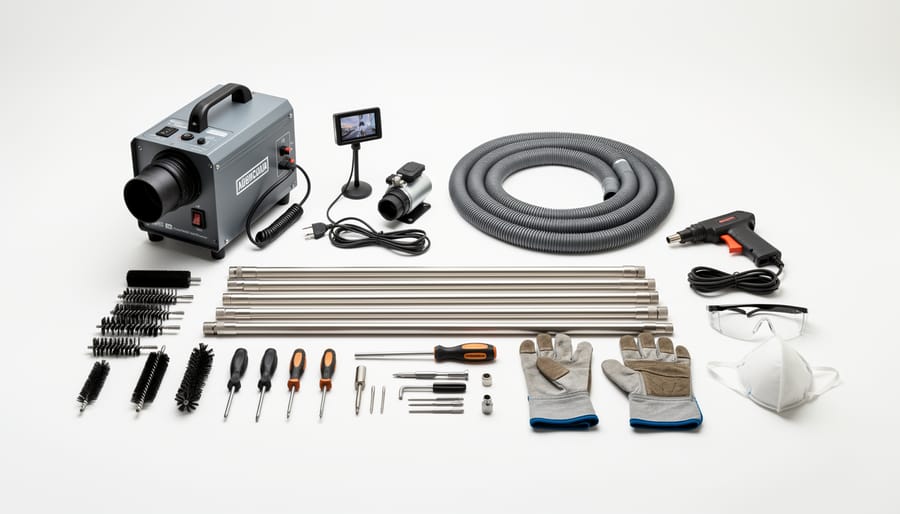
Most consumer-grade kits share a similar foundation, though quality and completeness vary widely across brands and price points. Understanding what you’re actually getting helps set realistic expectations before you start working on your vents.
A typical kit contains several core components designed to reach into ducts and dislodge debris:
- Rotating brushes in various sizes to scrub duct walls and loosen dust buildup
- Flexible extension rods that connect together, allowing you to reach deeper into straight duct runs
- Vacuum hose attachments that adapt your household vacuum to capture loosened debris
- Basic cleaning solutions or sanitizing sprays formulated for HVAC systems
- Protective gear like gloves and dust masks for safe handling
The brushes usually feature stiff bristles mounted on a rotating head. You attach them to the extension rods and manually push them through accessible duct sections. These rods typically screw together, extending six to twelve feet depending on the kit. They’re meant for straight runs where you have direct access from a register opening.
The vacuum attachments are perhaps the most important component. They create a seal around your register opening, letting your home vacuum pull debris as you brush. Without adequate suction, you’re just redistributing dust rather than removing it.
Here’s what these kits don’t include: inspection cameras to see what’s actually in your ducts, HEPA-grade filtration to prevent redistribution of fine particles, or the negative air pressure systems that professionals use. They’re designed for light maintenance on accessible sections, not comprehensive cleaning of your entire duct network. For Montreal properties with older ductwork or multiple levels, that limitation becomes significant quickly.
When a DIY Kit Makes Sense (And When It Doesn’t)
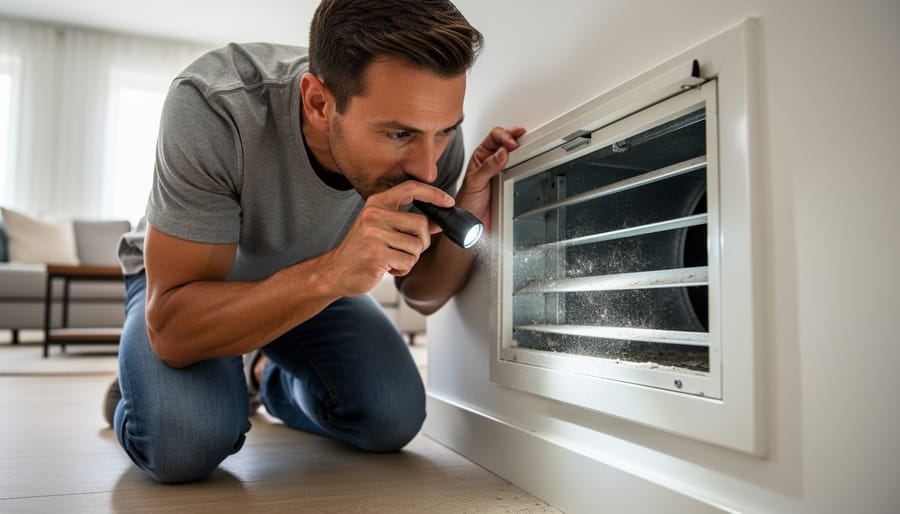
A basic air duct cleaning kit can handle light maintenance tasks effectively, but knowing your limits prevents wasted effort and potential damage to your system.
DIY kits work best for surface-level cleaning of accessible vents and returns in homes with straightforward duct layouts. If your vents show visible dust buildup around the grilles and you can easily reach the first few feet of ductwork, a brush and vacuum attachment will remove that surface layer. This approach makes sense for routine maintenance every few months in properties where professional cleaning happened within the past two years. Many Montreal homeowners successfully use basic kits to maintain newer systems in condos or recently constructed homes where ducts remain relatively clean.
However, most residential and commercial properties present challenges that basic equipment can’t address. Older Montreal buildings often feature complex duct configurations with multiple bends, vertical runs, and cramped spaces that flexible rods simply can’t navigate. If you can’t see more than three feet into your ducts with a flashlight, you’re likely missing significant buildup deeper in the system. Questions about does air duct cleaning work often arise because DIY attempts reach only a fraction of the system, leaving homeowners skeptical about results they can’t see or measure.
Skip the DIY route entirely if you notice moisture stains around vents, musty odors when your HVAC runs, or visible mold growth. These conditions require proper containment, specialized removal techniques, and often treatment of the underlying moisture problem. Similarly, post-renovation cleanup demands industrial-grade negative air machines to prevent construction dust from circulating throughout your property. Consumer kits lack the suction power to pull fine particulate matter from ductwork effectively.
Safety matters too. If your ducts contain asbestos insulation, common in pre-1980s Montreal buildings, any disturbance requires certified professionals with proper containment protocols. Pest droppings present similar hazards, potentially releasing harmful pathogens when disturbed without appropriate protective measures.
The honest truth: if you’re asking whether a kit will solve your air quality concerns, you probably need professional assessment rather than a DIY solution.
What Professional-Grade Equipment Brings to the Table
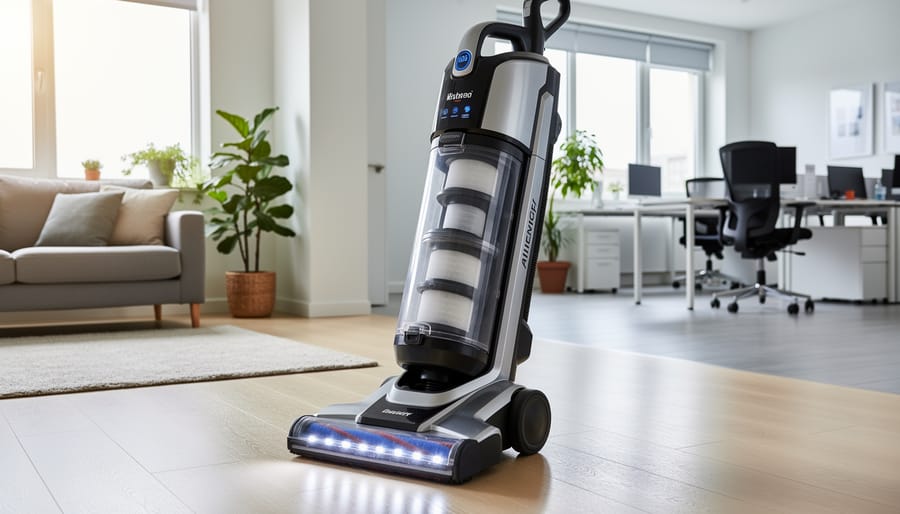
The gap between a consumer-grade kit and professional equipment isn’t just about size or cost, it’s about what actually gets cleaned and how thoroughly. When you rent or buy a DIY kit, you’re typically working with a shop vacuum adapter and brushes that can reach maybe 10 to 15 feet into your ductwork. Professional systems like those used by Gem Cleaning employ truck-mounted or portable negative air machines that generate 5,000 to 16,000 cubic feet per minute of suction, creating enough airflow to pull debris from the entire duct system rather than just the accessible portions near vents.
Camera inspection technology makes a significant difference too. Consumer kits rely on guesswork, you push a brush through and hope for the best. Professional services use fiber-optic cameras to navigate your ductwork before and after cleaning, identifying problem areas like disconnected ducts, hidden mold growth, or pest nests that you’d never spot otherwise. This visual documentation also provides proof that the work was done properly, which matters when you’re investing in your property’s air quality.
| Capability | DIY Kit | Professional Equipment |
|---|---|---|
| Suction Power | 50-150 CFM (shop vac) | 5,000-16,000 CFM (negative air machine) |
| Duct Reach | 10-15 feet from vent | Entire system including main trunks |
| Filtration | Standard dust bag | True HEPA filters (99.97% at 0.3 microns) |
| Sanitization | Surface spray only | Eco-friendly fogging systems for full coverage |
The filtration difference matters especially for Montreal homes dealing with seasonal allergens and humidity-related concerns. DIY vacuums often recirculate fine particles back into your living space through exhaust. Professional HEPA filtration captures microscopic contaminants, pollen, mold spores, dust mite waste, preventing them from cycling through your home during the cleaning process.
Gem Cleaning’s eco-friendly sanitization approach goes beyond what any consumer product can accomplish. After mechanical cleaning, specialized fogging equipment disperses botanical antimicrobial solutions throughout the entire duct system, reaching surfaces that brushes and vacuums can’t touch. This treats the whole environment rather than just wiping down visible areas, addressing odors and potential microbial growth without harsh chemicals that linger in your air supply.
Maintenance Between Professional Cleanings: Your Kit’s Best Role
Your air duct cleaning kit isn’t meant to replace professional service, but it can keep your system fresher between deep cleanings. Think of it as the equivalent of vacuuming between carpet shampooing sessions.
Every three to four months, use your brush attachment to clean the visible portion of your registers and the first few inches of accessible ductwork. Remove the register covers, wipe them down with a damp cloth, and use your vacuum’s crevice tool to capture loose dust just inside the vent opening. This simple routine prevents dust buildup from becoming entrenched and reduces the amount of debris circulating through your home.
Your kit is particularly useful after Montreal’s pollen-heavy spring months or during fall leaf season. A quick pass with your brush removes surface accumulation before it travels deeper into your system. You can also tackle return air grilles, which tend to collect household dust faster than supply vents.
Set realistic expectations: your maintenance routine won’t remove stuck-on grime, reach deep into trunk lines, or address contaminants that have settled beyond the first bend. You’re simply preventing easy-to-reach areas from becoming problem zones.
Keep a log of your maintenance sessions. If you notice you’re cleaning more frequently because dust returns quickly, or if your efforts don’t seem to make a visible difference, those are signs your system needs professional attention. Regular light maintenance extends the time between deep cleanings from the typical two to three years to potentially four years in homes without pets or smokers, but it can’t substitute for the thorough cleaning your ducts eventually require.
Red Flags That Mean It’s Time to Call the Professionals
Some situations demand more than a consumer-grade kit and a can-do attitude. If you spot visible mold growth around your vents or registers, whether it’s dark patches, fuzzy discoloration, or that distinctive musty smell, stop and call for help. Mold spores can spread throughout your system during amateur cleaning attempts, making the problem worse instead of better. Montreal’s humid summers and cold winters create the perfect conditions for mold growth in ductwork, especially in older buildings with less insulation.
Pest activity is another clear signal to step back. If you hear scratching, find droppings near vents, or notice unusual odors that suggest rodent or insect presence, your ducts need professional assessment and sanitization. A basic brush kit won’t address the nesting materials, waste, or potential entry points that pests create.
Recent renovations also exceed DIY capabilities. Construction dust contains fine particles, drywall compounds, and sometimes hazardous materials that require commercial-grade HEPA vacuums and negative air machines to remove safely. Your household vacuum attachments simply can’t capture these microscopic contaminants.
Pay attention to health signals too. If household members develop unexplained respiratory symptoms, increased allergy flare-ups, or persistent coughing that improves when they leave the property, your air quality needs professional investigation. This is especially true for when you need duct cleaning to protect vulnerable family members or employees with asthma or compromised immune systems. Strange odors that return quickly after DIY attempts, visible dust streaming from vents when your system runs, or black streaks around registers all point to contamination levels beyond what a homeowner kit can handle.
Making the Smart Investment for Your Property
A $50 cleaning kit can handle light maintenance, but here’s the math that matters: professional duct cleaning every three to five years costs less than you’d spend repeatedly buying tools that can’t reach the real problems. Most Montreal homeowners spend between $300 and $600 for a thorough professional cleaning that addresses contamination a brush kit simply can’t touch.
Think of it this way: your furnace runs more efficiently when ducts are properly cleaned, which means lower heating bills through our harsh winters. That efficiency gain often offsets the service cost within a year or two. You’re not just paying for cleaner air, you’re investing in a system that works better and lasts longer.
At Gem Cleaning, we use eco-friendly products and HEPA-filtered equipment that removes allergens and contaminants without introducing harsh chemicals into your home or business. Our customer satisfaction guarantee means we don’t consider the job done until you’re breathing easier. When you spot signs duct cleaning is needed persistent dust, musty odors, visible mold, that’s your cue to call in professionals rather than tackle it with a basic kit.
The smartest approach combines both: use your kit for accessible register maintenance between professional visits, but schedule comprehensive cleaning when it counts. This balanced strategy keeps your property’s air quality high without breaking the budget.
A quality air duct cleaning kit can help you maintain cleaner ducts between professional services, but it’s not a replacement for comprehensive care. For Montreal homeowners and business owners who want truly clean air and peace of mind, Gem Cleaning combines professional-grade equipment with eco-friendly practices and competitive pricing. We’re here when you’re ready for a thorough assessment, your indoor air quality deserves expert attention.